GOAL 12: Responsible consumption and production
Campus Waste Management and Reduction Strategy
UAEU applies a comprehensive waste management approach designed to reduce landfill
disposal and increase recycling across the campus. Working in collaboration with its
facilities management company, the University follows a structured Waste Reduction
Plan that promotes waste segregation at source, the use of designated recycling stations,
and the responsible handling of general, organic, medical, and electronic waste. Regular
waste audits, partnerships with certified waste contractors, and expanded recycling
programs for paper, plastic, metal, and e-waste support the University’s commitment
to sustainability. UAEU also implements campus-wide awareness initiatives targeting
students, staff, and hostel residents while actively decreasing the use of single-use
items and encouraging reusable alternatives. Enhanced collection systems, monitoring
tools, and performance tracking further strengthen overall waste reduction and resource
efficiency.
Sustainability Policy and Ethical Procurement
UAEU has adopted an institutional Sustainability Policy that embeds environmental,
social, and governance (ESG) principles into operational and procurement processes.
This policy promotes sustainable purchasing practices that prioritize environmentally
friendly, energy-efficient, and ethically sourced products and services. It emphasizes
full lifecycle considerations, including material sourcing, carbon footprint, and
end-of-life waste management and expects suppliers to meet high environmental and
labor standards. These requirements reinforce responsible supply-chain practices that
align with UAEU’s long-term sustainability objectives.
Awareness Campaigns and Community Engagement
The College of Agriculture and Veterinary Medicine launched the “Food Waste Audit”
awareness campaign in collaboration with the Office of the Associate Provost for Research,
Abu Dhabi Waste Management Center (Tadweer), and several local institutions. This
initiative aims to promote a sustainable campus environment by identifying food waste,
enhancing recycling efforts, and supporting environmentally friendly projects. The
campaign also encourages student-led research competitions and programs focused on
building awareness and promoting positive behavioral changes in food consumption and
waste management.
Research Supporting Waste Management and Recycling
Advancing Circular Economy Solutions
UAEU supports a range of sustainability-oriented research projects that contribute
to waste reduction, recycling technologies, and circular-economy practices. Examples
include investigations into thermoplastic recycling and the development of intelligent
waste-sorting systems using computer vision. These projects strengthen the University’s
research contributions to national sustainability goals and global environmental challenges.
Valorization of Agricultural and Organic Waste
A notable research achievement includes the project led by Prof. Ali Al-Marzouqi,
Dean of the College of Graduate Studies, titled “Converting Palm Waste into High-Value Products: A Sustainable Way of Using Resources.” This project won the National Center for Palms and Dates International Prize 2023
in Riyadh, Saudi Arabia, in the “Best Scientific Researcher” category. The study demonstrates
UAEU’s leadership in transforming agricultural waste into valuable and sustainable
products.
Plastic Waste Reduction and Recycling Innovations
- Innovators in Sustainability Challenge:
A team of UAEU students from the College of Science presented DPS4OiL, an innovative project that uses recycled materials to absorb oil spills. By converting
agricultural and plastic waste into functional absorbent products, the project addresses
environmental issues while promoting creative recycling solutions.
- Recycling Plastic Bottles into New Materials:
A UAEU research team conducted a study on converting scrap plastic bottles into re-manufactured
materials. This work supports waste reduction, enhances sustainable engineering practices,
and contributes to circular-economy applications by turning discarded plastics into
usable resources for scientific and operational purposes.
Research

UAEU Scientists Transform Plastic Bottles into Sustainable Lightweight Structures
A research team from the United Arab Emirates University conducted a research project
to recycle scrap plastic bottles into re-manufactured materials, contributing to waste
reduction, preserving a clean and sustainable environment, and promoting scientific
and operational applications, which in turn contribute directly to sustainable environmental
engineering and the circular economy.
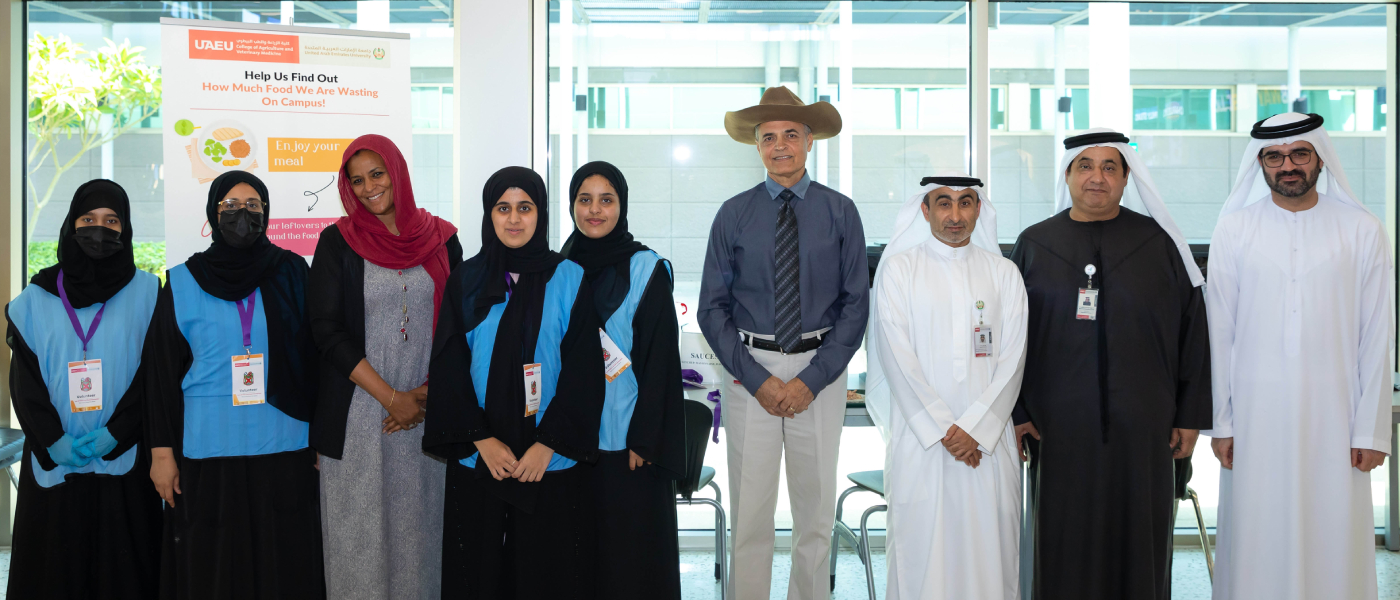
College of Agriculture and Veterinary Medicine at the UAE University launches an awareness
campaign to reduce food waste
The College of Agriculture and Veterinary Medicine at the United Arab Emirates University
launched an awareness campaign entitled "Food Waste Audit", in cooperation with the
Office of the Associate Provost for Research and participation of the Abu Dhabi Waste
Management Center (Tadweer) and a number of local institutions.

UAEU researcher wins the 2023 National Center for Palms and Dates International Prize
in Riyadh
Prof. Ali Al-Marzouqi, Dean of the College of Graduate Studies at the UAE University,
Project: “Converting palm waste into high-value products: a sustainable way of using
resources” won the National Center for Palms and Dates International Prize 2023 in
Riyadh, Kingdom of Saudi Arabia, in the “Best Scientific Researcher” category.
UAEU Students Tap Into UAE Resource to Address Critical Environmental Issues
With around 40 million date palm trees spread across the UAE, the United Arab Emirates
University students are finding innovative and sustainable ways to tap into the resource.